
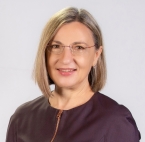
Prof. Laura Marcu
University of California, USA
Laura Marcu is a Professor of Biomedical Engineering and Neurological Surgery at the University of California, Davis. She received her Ph.D. in Biomedical Engineering from the University of Southern California in 1998. Dr. Marcu is the founding director of the NIH-NIBIB P41 National Center for Interventional Biophotonic Technologies at UC Davis, established in 2022. Since 2007, she has also served as co-director of the Biomedical Technology Program within the UC Davis Comprehensive Cancer Center. Her research is centered on biomedical optics, with a focus on the development and clinical translation of label-free optical technologies for real-time tissue diagnostics. Her work spans applications in surgical oncology, interventional cardiology, and tissue engineering. Dr. Marcu has published a book and over 250 articles. She currently serves on the Editorial Boards of Journal of Biophotonics and Translational Biophotonics, and is an Associate Editor for Optica. She is a Fellow of the American Association for the Advancement of Science (AAAS), the American Institute for Medical and Biological Engineering (AIMBE), the Biomedical Engineering Society (BMES), OPTICA, SPIE, and the National Academy of Inventors (NAI).
Speech Title:"Fluorescence Lifetime Imaging in Clinical Applications: The Emerging Role of Data-Centric Approaches"
Abstract: Accurate intraoperative delineation of tumor margins remains a critical challenge in surgical oncology, directly impacting resection completeness and patient outcomes. Label-free fluorescence lifetime imaging (FLIm), which measures the time-resolved decay of endogenous fluorophores, has emerged as a powerful modality for real-time assessment of tissue biochemical composition and metabolic state. This talk will highlight the evolving role of data-centric artificial intelligence (AI) in advancing the clinical translation of FLIm. We present a data-centric AI framework that enhances the robustness, accuracy, and interpretability of FLIm-guided surgery by systematically addressing key intraoperative challenges: (1) precise detection and tracking of the FLIm aiming beam for accurate spatial mapping within dynamic surgical environments, (2) reliable classification of malignant versus non-malignant tissue across heterogeneous patient populations, and (3) compensation for tissue motion during imaging. The approach is demonstrated using FLIm data from 100 patients with head and neck cancer undergoing both transoral robotic surgery (TORS) and conventional procedures. By emphasizing data quality, curation, and domain-informed modeling, our results show significant improvements in both spatial localization and diagnostic performance. Together, these advances underscore the potential of data-centric approaches to transform FLIm into a robust, real-time, image-guided tool, enabling more precise intraoperative decision-making and improving outcomes in head and neck cancer surgery.
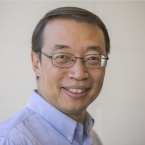
Prof. Chris Xu
Cornell University, USA
Director of the School of Applied and Engineering Physics
Mong Family Foundation Director of Cornell Neurotech-Engineering
IBM Professor of Engineering
Chris Xu's group at Cornell pioneered the development of temporal focusing and long-wavelength two- and three-photon microscopy for deep-tissue imaging. His current research areas are fiber optics and optical imaging, with major thrusts in deep-tissue imaging, laser development, and smart and efficient optical imaging. Prior to Cornell, he was a member of technical staff at Bell Labs and pioneered the development of differential phase-shift keying for long-haul fiber-optic communications. He received his Ph.D. in Applied Physics, Cornell University, and his B.S. in Physics from Fudan University. He served as the Director of Graduate Studies in Applied Physics from 2007 to 2013, and the Director of Undergraduate Studies of the School of Applied and Engineering Physics from 2014 to 2016. Dr. Xu has chaired or served on many conference organization committees and NSF/NIH review panels. He served on the NIH NEI External Scientific Oversight Committee of the Audacious Goal Initiative and is currently serving on the Optica Biomedical Congress Strategic Planning Committee. He served as Associate Editor for Biomedical Optics Express, and is on the editorial boards of several journals. He has served and is currently serving as consultants or on the advisory boards of a number of commercial companies and academic research centers. He has published 9 book chapters and more than 300 journal and conference papers. Dr. Xu has delivered more than 300 plenary/keynote/invited conference presentations and research seminars. In addition, he has given dozens of outreach talks. He holds 25 patents on optical communications and imaging. He has won the NSF CAREER award, Bell Labs team research award, and the Tau Beta Pi and two other teaching awards from Cornell Engineering College. He received a Cornell Engineering Research Excellence Award in 2017 and was selected as an Ivy+ Provost Leadership Fellow in 2022. He is a fellow of the National Academy of Inventors and a fellow of Optica (formerly the Optical Society of America).
Speech Title:"Pushing the Limits of Imaging Depth of Multiphoton Microscopy"
Abstract: Multiphoton microscopy is an indispensible tool for high-resolution, non-invasive imaging of structure and function deep within intact tissues and organs. In this talk, we will focus on technology development for in vivo imaging at unprecedented depth in mouse brains, mouse lymph nodes, and mouse cancer models. We will further discuss the depth limit of high spatial resolution imaging, and new development to reach these limits in multiphoton microscope.

Prof. Dong Ming
Tianjin University, China
Prof. Dong Ming is the Chair Professor of the Department of Biomedical Engineering of TJU, the director of the Tianjin Neural Engineering Center, the director of Academy of Medical Engineering and Translational Medicine and the Chair of IEEE-EMBS Tianjin Chapter; Award winner of National Science Foundation for Distinguished Young Scholars; Award winner of the first National Science Foundation for Excellent Young Scholars; Young and Middle-Aged Leading Talents of Science and Technology Innovation, Ministry of Science and Technology of China; Expert funded with State Council Government Special Allowance; Director of Intelligent Medical Engineering, Engineering Research Center of Ministry of Education of China; Director of Tianjin Brain Science and Brain-Like Research Center; Life Member of IFESS; Chairman of youth working committee of Chinese Society of Biomedical Engineering; Deputy Editor in Chief of International Journal of Biomedical Engineering. Prof. Ming has been authorized for more than 80 patents and software works, and several international patents under PCT. Several of his research papers has been selected as TOP Cited Paper Award for IOP Publishing, Highlight for JNE, Highly Accessed for JNER and Cover papers of IEEE TBME etc., several papers were reported by Nature and Science in special issues. Relevant achievements were selected into the 13th Five-Year Scientific and Technological Innovation Achievement Exhibition.

Prof. Hideaki Haneishi
Chiba University, Japan
Hideaki Haneishi received his BS degree from the University of Electro-Communications in 1985 and received his M.S. and Ph.D. degrees from the Tokyo Institute of Technology, in 1987 and 1990, respectively. He joined Chiba University as a Research Associate in 1990. While continuing his career in Chiba University, he was invited as a Visiting Research Scientist at the Department of Radiology, University of Arizona, from October 1995 to July 1996. He is currently a Full Professor and the Director at the Center for Frontier Medical Engineering (CFME), Chiba University. He has published more than 150 papers in refereed journals with more than 3900 citations (Google Scholar). His research interests include spectral imaging, biomedical optics, image reconstruction and motion picture analysis in medical field. Prof Haneishi has been expanding and strengthening his international research network while serving as PI of the Core-to-Core Program named 鈥淚nternational Network of Multi-modal Medical Engineering for Precision Medicineéˆ?(2017-2022) adopted by the Japan Society for the Promotion of Science (JSPS). In this program, researchers from Finland, China, Canada, Thailand, USA, France and New Zealand study together for collaboration. He is also an active member of Chiba Central Toastmasters Club, a branch of Toastmasters International, a nonprofit educational organization aimed at public speaking and leadership skills through a worldwide network of clubs.

Prof. Jimmy Liu
Southern University of Science and Technology, China
Jimmy Liu graduated from the Department of Computer Science of the University of Science and Technology of China in 1988. He further obtained his master and doctoral degrees in Computer Science from the National University of Singapore. In 2004, he started and grew the Intelligent Medical Imaging Research Team (iMED Singapore), focusing on ocular Artificial Intelligence research. Jimmy was the chairman of the IEEE Singapore Biomedical Engineering Society in Singapore before moving to China. In March 2016, Jimmy moved to China and became the founding institute director of the Cixi Institute of Biomedical Engineering (CIBE) under the Chinese Academy of Sciences (CAS). He further founded the iMED China Ningbo team in CIBE focusing on ocular image AI research. In February 2019, he joined the Department of Computer Science and Engineering of the Southern University of Science and Technology and established iMED China Shenzhen continue to focus on ocular AI image AI research. Right now, iMED China team are devoting themselves to eye-brain imaging, ocular imaging, ocular precision medicine, and ocular surgical robotics 4 research areas.

Prof. Ruikang Wang
University of Washington, USA
Dr. Wang is a professor of bioengineering and ophthalmology at the University of Washington. He also holds the prestigious positions of George and Martina Kren Endowed Chair In Ophthalmology Research and WRF/David and Nancy Auth Endowed Innovator of Bioengineering. His current research interests include biophotonics and imaging, optical coherence tomography and their applications in ophthalmology, neuroscience, dermatology and cancer. Dr Wang has published over 500 peer reviewed journal articles. He is an elected fellow of Optica, SPIE and AIMBE. He is also the Editor in Chief for Biomedical Optics Express, an Optica Publishing Group journal.
KEYNOTE SPEAKER OF IMIP 2022

Prof. Syoji Kobashi
University of Hyogo, Japan
Syoji Kobashi received BE in
1995, ME in 1997, and Doctor of Engineering in 2000,
all from Himeji institute of Technology. He was an
assistant professor at Himeji Institute of Technolog
(2000-2004), an associate professor (2005-2016),
currently a professor (2016-) and the manager of
advanced medical engineering research center
(2016-), University of Hyogo. And, he was a guest
associate professor at Osaka University, WPI
immunology frontier research center (2010-2016), and
was a visiting scholar at University of Pennsylvania
(2011-2012). His research interests include medical
image understanding and artificial intelligence. He
received 16 international awards, including Lifetime
Achievement Award (WAC, 2016), Franklin V. Taylor
Memorial Award (IEEE-SMCS, 2009). He has been
serving on Program Chair of WAC2020, and many
others. Moreover, he is an editor-at-large of
Intelligent Automation & Soft Computing journal, an
editor-in-chief of International Journal of
Biomedical Soft Computing and Human Sciences, etc.
He is the senior member of IEEE.

Prof. Xia Wu
Beijing Normal University, China
Dr. Xia Wu is presently the professor and doctoral supervisor of the School of Artificial Intelligence and the State Key Laboratory of Cognitive Neuroscience and Learning of Beijing Normal University. She has been engaged in intelligent algorithms exploration based on brain imaging data, neural feedback, brain disease diagnosis and prediction. Dr. Wu has published nearly 100 research papers on top journals and conferences, such as IEEE TNNLS, NeuroImage, Human Brain Mapping, Medical Image Analysis, IPMI, MICCAI and etc. She was supported by the Excellent Youth Foundation of NSFC, and won the first prize of Wu Wen Jun AI Science & Technology Award and the second prize of Natural Science Award of the Ministry of Education as the first accomplisher.
KEYNOTE SPEAKER OF IMIP 2021

Prof. David Zhang, RSC Fellow, IEEE Fellow and IAPR Fellow
Chinese University of Hong Kong (Shenzhen), China
David Zhang graduated in Computer Science from Peking University. He received his MSc in 1982 and his PhD in 1985 in both Computer Science from the Harbin Institute of Technology (HIT), respectively. From 1986 to 1988 he was a Postdoctoral Fellow at Tsinghua University and then an Associate Professor at the Academia Sinica, Beijing. In 1994 he received his second PhD in Electrical and Computer Engineering from the University of Waterloo, Ontario, Canada. He has been a Chair Professor at the Hong Kong Polytechnic University where he is the Founding Director of Biometrics Research Centre (UGC/CRC) supported by the Hong Kong SAR Government since 2005. Currently he is Presidential Chair Professor in Chinese University of Hong Kong (Shenzhen). Over past 30 years, he have been working on pattern recognition, image processing and biometrics, where many research results have been awarded and some created directions, including medical biometrics and palmprint recognition, are famous in the world. So far, he has published over 20 monographs, 500 international journal papers and 40 patents from USA/Japan/HK/China. He has been continuously listed as a Highly Cited Researchers in Engineering by Clarivate Analytics during 2014-2020. He is also ranked about 80 with H-Index 120 at Top 1,000 Scientists for international Computer Science and Electronics. Recently Professor Zhang has been selected as a Fellow of the Royal Society of Canada. He also is a Croucher Senior Research Fellow, Distinguished Speaker of the IEEE Computer Society, and an IEEE Life Fellow and an IAPR Fellow.
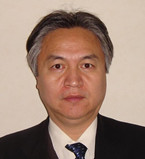
Prof. Yen-Wei Chen
Ritsumeikan University, Japan
Yen-Wei Chen received the B.E. degree in 1985 from Kobe Univ., Kobe, Japan, the M.E. degree in 1987, and the D.E. degree in 1990, both from Osaka Univ., Osaka, Japan. He was a research fellow with the Institute for Laser Technology, Osaka, from 1991 to 1994. From Oct. 1994 to Mar. 2004, he was an associate Professor and a professor with the Department of Electrical and Electronic Engineering, Univ. of the Ryukyus, Okinawa, Japan. He is currently a professor with the college of Information Science and Engineering, Ritsumeikan University, Japan. He is the founder and the first director of Center of Advanced ICT for Medicine and Healthcare, Ritsumeikan University. He is also an adjunct professor with the College of Computer Science, Zhejiang University, and Zhejiang Lab, China. He was a visiting professor with the Oxford University, Oxford, UK in 2003 and a visiting professor with Pennsylvania State University, USA in 2010. His research interests include medical image analysis, computer vision and computational intelligence. He has published more than 300 research papers in a number of leading journals and leading conferences including IEEE Trans. Image Processing, IEEE Trans. SMC, Pattern Recognition. He has received many distinguished awards including ICPR2012 Best Scientific Paper Award, 2014 JAMIT Best Paper Award, Outstanding Chinese Oversea Scholar Fund of Chinese Academy of Science. He is/was a leader of numerous national and industrial research projects.
